


The USDA’s National Institute of Food and Agriculture has awarded $5.6 million to support 11 projects that focus on converting, treating, processing, refining or manufacturing products to utilize plant, animal and woody biomass.
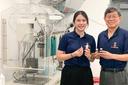
A research team at the University of Illinois Urbana-Champaign has developed a method to produce jet-grade fuel from food waste, contributing to a circular bioeconomy.

The U.S. Department of Energy's Alternative Fuels and Feedstocks Office will hold its 2027 Peer Review Meeting the week of April 19, 2027, to evaluate office-funded projects for their contributions to DOE's goals.
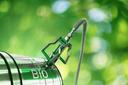
Earlier this year, the MIT Energy Initiative (MITEI) launched a major study to examine the sustainable fuel options for aviation, international shipping, long-haul trucking, and freight rail. The two-year study will be complete in 2028.

OMV has partnered with Technical University of Leoben to establish a one-of-a-kind research facility where various process routes to manufacture sustainable aviation fuels (SAF) are being researched and developed.
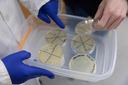
Researchers at the University of Wisconsin’s Great Lakes Bioenergy Research Center are developing toolkits for investigating microbial DNA to identify and tweak genes that can boost production of biofuels and plant-based chemicals.

Cathay is welcoming the release of Igniting the SAF Market: Policy Pathways for Scaling Sustainable Aviation Fuel in China, a research study published by Peking University’s National School of Development in late 2025.

Researchers at the Idaho National Laboratory have developed computer models that apply to processing bioenergy crops using equipment traditionally used by the food, minerals and pharmaceuticals industries.
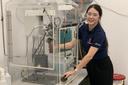
Researchers at the University of Illinois Urbana-Champaign have discovered a novel way to convert food waste into sustainable aviation fuel (SAF) that meets industry standards without relying on fossil fuel blends.
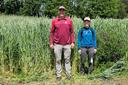
New research has found cover crops that are viable in Washington’s normal “off season” don’t hurt the soil and can be sold as a biofuel source. The study evaluated four cover crops that were grown for multiple years.

Rolls-Royce is leading a new project to find smarter ways of using sustainable aviation fuel (SAF) to increase its effectiveness and role in reducing non-CO2 emissions, specifically those associated with contrail formation.

With support from Minnesota Corn, University of Minnesota Professor of Chemical Engineering Paul Dauenhauer is exploring the corn-to-methanol pathway for biofuels, which could be used to produce SAF.
Iowa officials and lawmakers are calling on U.S. Agriculture Secretary Brooke Rollins to relocate the USDA’s Agricultural Research Service projects to Ames, Iowa, as part of the agency’s ongoing reorganization plan.

University of New South Wales researchers are set to scale up a next-generation electrolyzer system that helps produce sustainable aviation fuel (SAF) using renewable energy, thanks to a $1.2 million grant from the TRaCE Lab to Market Fund.

New research at Iowa State University shows that using advanced planting techniques can triple the amount of biomass produced by the perennial, bioenergy crop miscanthus in its establishment year.
Getting into the (sea)weeds: Exploring algae storage for biofuel conversion

By Lynn Wendt, Laboratory Relationship Manager, Idaho National Laboratory
August 23, 2024
Idaho National Laboratory is exploring the potential of processing sargassum, a type of seeweed, for conversion to biofuel. The team is working with affected communities and starting with the question of how to store the stuff.

Results from the world's first in-flight study of the impact of using 100% SAF in both engines of a commercial aircraft show a reduction in soot particles and formation of contrail ice crystals compared to using conventional Jet A-1 fuel.
Advertisement

@ Copyright 2026 - BBI International - All rights reserved.