


Twelve on July 11 broke ground on its commercial-scale E-Jet fuel production facility in Moses Lake, Washington. The company's technology uses only renewable energy and water to transform CO2 into critical chemicals, materials and fuels.
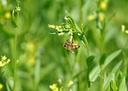
Louis Dreyfus Company and Global Clean Energy Holdings Inc. have agreed to jointly promote the sustainable cultivation of Camelina sativa (camelina) in South America, including the countries of Argentina, Paraguay, and Uruguay.

Channel Infrastructure and Fortescue Future Industries on July 5 announced that they will progress further investigation into the development of a green hydrogen manufacturing facility at Marsden Point to produce eSAF.
Blue Biofuels Inc. announced on July 11 it has been awarded a U.S. Department of Energy Small Business Innovation Research Phase 1 grant. The $206,500 grant will support efforts to scale and optimize the company's cellulose-to-sugar process.

The USDA’s Risk Management Agency on June 30 announced it will expand crop insurance for camelina in direct response to the anticipated increase in demand for the crop for biofuel production. The expansion provides additional grower certainty.
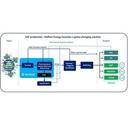
Haffner Energy in launching SAFNOCA, an integrated solution for the production of sustainable aviation fuel (SAF). The patented technology involves renewable synthetic gas production from diversified biomass and organic waste.

Topsoe has received funding from the Energy Technology Development and Demonstration Program for the FrontFuel project. The project will produce sustainable aviation fuel (SAF) using Fischer Tropsch technology.

Total operable biofuels production capacity in the U.S. expanded in April, according to data released by the U.S. Energy Information Administration on June 30. Feedstock consumption was up when compared to the same month of last year.

Uniper and Sasol ecoFT have jointly applied for funding from both the Swedish Energy Agency and the EU Innovation Fund for funding to support thier SkyFuelH2 project. Construction on the proposed SAF facility is expected to begin in 2025.

The USDA’ on June 30 announced that an estimated 83.5 million acres of soybeans have been planted in the U.S. for 2023, down 5 percent when compared to 2022. Soybean harvested area for 2023 is estimated at 82.7 million acres, down 4 percent.
Bunge and Chevron’s Renewable Energy Group Inc., a subsidiary of Chevron Corp., have acquired Argentina-based Chacraservicios S.r.l. Chacraservicios is focused on the cultivation of camelina sativa, which can be used to produce biofuels.

Marquis received the necessary permits for its Marquis South Dock Expansion project on the Illinois River at the Marquis Industrial Complex. The project supports a new soybean processing facility that will produce biofuel feedstock.
As interest in low carbon fuels gains momentum, Clean Fuels Alliance America continues to grow stronger and more diverse by adding new members. Since January, Clean Fuels has welcomed nine new companies.
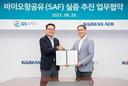
Korean Air has partnered with GS Caltex to conduct test flights using SAF. The test flights using SAF will be analyzed and the results will be used by the Korean government to establish SAF quality standards and accelerate commercialization.

Nippon Express Europe GmbH, a group company of Nippon Express Holdings Inc. and Lufthansa Cargo AG contractually agreed on June 20, 2023, to advocate the use of sustainable aviation fuel (SAF) when transporting airfreight shipments.

Boeing and the RSB will conduct a joint study to scale SAF production in Southeast Asia. Phase one of the study will evaluate whether SAF production could scale sustainably in Southeast Asia based on the availability and sustainability of feedstocks.

The Canadian Council for Sustainable Aviation Fuels launched a roadmap detailing its policy framework, its priority actions, and the next steps to ensure that the Canadian aviation sector remains competitive as it transitions to a net-zero future.

A subsidiary of Astra Energy Inc. is partnering with Phambili USA to combine total waste processing utilizing Regreen Technologies Inc.’s energy pellets with the Phambili conversion unit to produce SAF and other products.

Volaris announces a $50 million investment agreement alongside Indigo Partners, GenZero, Cleanhill Partners, Frontier Airlines, and Wizz Air. The investment aims to accelerate the production of SAF through the North American startup CleanJoule.

As part of a newly established collaborative, Lawrence Berkeley National Laboratory’s Advanced Biofuels and Bioproducts Process Development Unit will co-lead an effort to establish bioindustrial manufacturing capability in California.

The FAA has opened a public comment period regarding its intention to request OMB approval for a new information collection related to sustainable aviation fuel (SAF) grant funding included in the Inflation Reduction Act.
The governments of Canada and Manitoba announced on June 20 they will provide $2.9 million over two years to support front end engineering design (FEED) for Azure Sustainable Fuels Corp.’s proposed sustainable aviation fuel (SAF) plant.

Sasol and Topsoe have signed a landmark agreement to establish a 50/50 joint venture (JV) solidifying their commitment to produce SAF. The JV aims to develop, build, own, and operate SAF plants and market the SAF they produce.

LanzaJet and Airbus on June 22 announced they have entered into a memorandum of understanding (MOU) to address the needs of aviation through the production of sustainable aviation fuel (SAF). The agreement was announced during the Paris Air Show.

Carbon transformation company Twelve and Washington Gov. Jay Inslee on June 19 announced plans to scale the production of E-Jet fuel, Twelve’s SAF made from CO2 and renewable energy, with a commercial-scale production facility in Moses Lake.

A group of 16 senators on June 16 sent a letter to U.S. Treasury Secretary Janet Yellen urging the agency to adopt the U.S. Department of Energy’s GREET model as the secondary methodology for calculating tax credits for SAF.
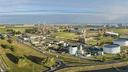
TotalEnergies is actively responding to a call from its aviation customers to increase production of sustainable aviation fuel (SAF) and has announced it will be in a position to produce half a million tons of SAF annually by 2028.
LanzaJet and LanzaTech , on June 15 announced they have been selected by Air New Zealand and the New Zealand government to support the second stage of a study to determine commercial viability and sustainability of domestic SAF production.
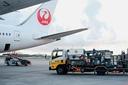
Japan Airlines (JAL) has signed an agreement with Shell Aviation which will see aircraft refueled in Los Angeles with SAF from 2025, supporting JAL’s ESG target of replacing 1 percent of its whole jet fuel amount with SAF in 2025.

EcoCeres Inc. is investing in a new biofuel production facility in Pasir Gudang, Johor, Malaysia. The facility will produce HVO, SAF and bio-naphtha with an annual capacity target at 350,000 metric tons.
Advertisement

@ Copyright 2026 - BBI International - All rights reserved.