


Neste is marking two significant milestones: the 15th anniversary of its renewable products refinery in Singapore and the 60th anniversary of its Porvoo refinery in Finland. Both facilities currently produce renewable fuels.

XCF Global Inc. on Nov. 3 announced a memorandum of understanding (MOU) with Impact Jets LLC, a private aviation platform, to accelerate sustainable aviation fuel (SAF) adoption across the private jet market.

Topsoe has been selected to deliver its HydroFlex, SynCOR and H2bridge technologies, as well as catalysts and equipment, for NXTClean Fuels’ Port Westward project in Clatskanie, Oregon, to produce SAF and renewable diesel.

The European Commission on Nov. 5 unveiled its Sustainable Transport Investment Plan, an initiative that aims to rapidly accelerate the energy transition in aviation and marine sectors, including through the use of SAF and marine biofuels.

The U.S. EPA on Oct. 29 announced it will reopen a comment period related to a proposed extension of an information collection request (ICR) focused on provisions regarding biointermediates under the Renewable Fuel Standard.

LanzaJet Inc. has awarded the front-end engineering and design (FEED) for Project Speedbird to Fluor Corp. The commercial-scale ethanol-to-jet facility in Teesside, U.K., will produce approximately 30 MMgy of sustainable aviation fuel (SAF).
The European Union Aviation Safety Agency published the first ReFuelEU Aviation Annual Technical Report, laying out the initial picture of how SAF are being supplied, purchased and used across the European Union.

Representatives of the U.S. biofuels industry urged the U.S. EPA to fully reallocate RVOs waived via small refinery exemptions (SREs) under the RFS in comments filed with the agency ahead of an Oct. 31 deadline.
XCF Global Inc. has signed a binding term sheet with New Rise Australia Pty. Ltd. (New Rise AU) to accelerate the development of biorefineries in Australia. New Rise AU is expected to build and operate at least three SAF facilities.

Rep. Mike Thompson, D-Calif., on Oct. 28 introduced a bill that aims to reinstate many of the renewable energy tax credits eliminated by the One Big Beautiful Bill, including the reinstatement of the 45Z clean fuel production credit “special rate” for SAF.

Plug Power Inc. on Oct. 23 announced a strategic partnership with Edgewood Renewables to support the development and construction of its advanced renewable fuel facility in North Las Vegas, Nevada, that will produce SAF and renewable diesel.
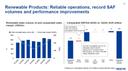
Neste Corp. on Oct. 29 announced sales of SAF reached a record 251,000 metric tons during Q3. The company’s renewable products segment reported improved EBTIDA, comparable sales margins and sales volumes for the three-month period.
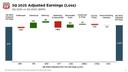
Phillips 66 doubled its production of SAF during the Q3 and expects additional increases in production to be realized in Q4, according to statements made during the company’s third quarter earnings call on Oct. 29.
The International Biomass Conference & Expo and the American Boiler Manufacturers Association BOILER Expo are joining forces in 2026 for an unprecedented colocation event in Nashville, Tennessee, March 31 – April 2, 2026.

Parkland Corp. released Q3 results on Oct. 27, reporting that the volume of biobased feedstock co-processed at its Burnaby Refinery was up 50%. The company also announced its previously announced purchase by Sunoco LP is expected to close Oct. 31.

The Washington Department of Ecology is working to develop a programmatic environmental impact statement for SAF that will provide a foundation for future project-level environmental reviews. A public comment period is open through Nov. 5.

The U.K. Department for Transport on Oct. 16 confirmed it will implement a revenue certainty mechanism for SAF in the form of an aviation fuel supplier levy. The agency is currently seeking public comments regarding implementation details.

Honeywell on Oct. 28 introduced its new Biocrude Upgrading process technology, which converts agricultural and forestry waste into ready-to-use renewable fuels, including marine fuels, gasoline and SAF.
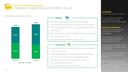
Italy-based energy company Eni on Oct. 24 released Q3 results, reporting that its Enilive business segment processed 315,000 metric tons of biobased feedstock during the three-month period, up 14% when compared to the same period of 2024.

More than two dozen federal lawmakers on Oct. 20 sent a letter to U.S. Treasury Secretary Scott Bessent urging his agency to finalize guidance for the 45Z clean fuel production credit, as amended by the One Big Beautiful Bill earlier this year.

Montana Renewables, in collaboration with Calumet Montana Refining, has commissioned onsite blending and shipping facilities to offer a nominal 50/50 blend of renewable and fossil jet fuel certified under ASTM D7566 and ASTM D1655 specifications.
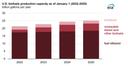
The pace of capacity additions for U.S. biofuel production slowed in 2024, with production capacity increasing by a modest 3% from the start of 2024 to the start of 2025, according to the EIA's latest biofuels production capacity reports.

Par Pacific Holdings Inc. on Oct. 21 announced the successful closing of Hawaii Renewables LLC, a joint venture to construct a renewable fuels facility and produce renewable fuels at Par Pacific’s refinery in Kapolei, Hawaii.

Airbus and the Cathay Group on Oct. 21 announced a joint investment of up to US$70 million to accelerate the development of sustainable aviation fuel (SAF) production in Asia and globally.

Valero Energy Corp. on Oct. 23 released Q3 results, reporting a profitable three-month period for its ethanol segment on record high production. Valero’s renewable diesel segment, which also includes SAF, reported a loss for the quarter.

Neste and United Airlines have expanded their existing partnership to supply SAF to three new major airports in the U.S., including George Bush Intercontinental Airport, Newark Liberty International Airport, and Dulles International Airport.

Eni has announced plans to develop a 500,000-metric-ton-per-year biorefinery at its existing industrial site in Priolo, Sicily. The facility, which will produce renewable diesel and SAF, is expected to be operational in 2028.

The U.S. Energy Information Administration is proposing to update current disclosure rules for biofuel feedstock consumption as part of a proposed three-year extension of its Petroleum Supply Reporting System.

Clean Fuels Alliance America on Oct. 22 wrote U.S. Trade Representative Jamieson Greer, asking him to close a loophole in the administration’s Reciprocal Tariff regime that exempts diesel and renewable diesel from reciprocal tariffs.
The call for presentation abstracts for the 19th annual International Biomass Conference & Expo is now open. The event will take place in Nashville, Tennessee, March 31 – April 2, 2026. Abstracts can be submitted through Nov. 21.
Advertisement

@ Copyright 2026 - BBI International - All rights reserved.