


Bangchak Group has launched Thailand’s first commercial production of sustainable aviation fuel (SAF) from the country’s first 100% HEFA-SPK SAF stand alone production unit at Bangchak Phra Khanong Refinery.

In May, the U.S. Grains & BioProducts Council’s regional office for Southeast Asia & Oceania (SEA&O) traveled to Da Nang, Vietnam to participate in the Asia Sustainable Aviation Fuel (SAF) Association’s Innovation & Policy Summit.

Hazer Group Ltd. on May 12 announced it has entered into a non-binding memorandum of understanding (MOU) with Continual Renewable Ventures to assess opportunities for developing low carbon liquid fuels (LCLF) production in Australia.
The Ontario government on May 8 announced it is investing $5.5 million to help Greenwater Technology produce renewable diesel and sustainable aviation fuel (SAF) from mill byproducts and underused wood.

DHL Express and Dubai-based next generation SAF developer SAF One on May 12 announced the signing of a landmark offtake agreement, bringing the first SAF production facility in the Middle East into DHL's global SAF supply network.

Gpi Tanks XL has been selected by Technip Energies for the construction of 22 stainless steel storage tanks for the SkyNRG project in Delfzijl, the Netherlands. The sustainable aviation fuel (SAF) facility is expected to begin production in 2028.
FlyORO Technologies Pte. Ltd. and Aether Fuels on May 11 announced the signing of a non-binding MOU to jointly explore the potential development of SAF supply-chain, blending and associated activities in support of Aether's Project Beacon.

The U.S. House of Representatives on May 13 voted 218 to 203 to approve the Nationwide Consumer and Fuel Retailers Choice Act. The bill aims to enable year-round E15 sales and revamp the RFS small refinery exemption (SRE) program.

The Sustainable Advanced Biofuel Refiners Coalition on May 13 announced it is pro-biofuels, pro-agriculture and pro-E15. The group, however, does not support the SRE provisions of the Nationwide Consumer and Fuel Retailer Choice Act.

BDI-BioEnergy International and Ghent Renewables have successfully commissioned an industry-leading feedstock pretreatment plant at North Sea Port in Ghent, Belgium. The plant will strengthen the supply chain for sustainable fuels, including SAF.

North Sea Port has announced LanzaTech’s will develop Europe’s first commercial plant for sustainable aviation fuel (SAF) based on alcohol-to-jet technology at its site in Ghent, Belgium. The facility will also produce renewable diesel.

The U.S. EIA increased its forecast for 2026 renewable diesel production in its latest Short-Term Energy Outlook, released May 12. The 2026 forecasts for biodiesel and other biobased diesel fuels, which includes SAF, were maintained.

The USDA expects soybean oil use in biofuel production to expand significantly during the 2026-’27 marketing year, according to the agency’s latest World Agricultural Supply and Demand Estimates report, released May 12.

BRIGHT, the Novo Nordisk Foundation Biotechnology Research Institute for the Green Transition at the Technical University of Denmark, and LanzaTech Global have entered a multi-year agreement to accelerate development carbon-to-value biotechnology.
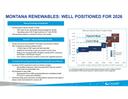
Calumet Inc. on May 8 confirmed that the MaxSAF expansion at its Montana Renewables facility was completed on time and on budget. The facility has resumed operations and now has the capacity to produce 150 MMgy of SAF.

Gevo Inc. on May 7 confirmed the company has received nonbinding indications of interest from multiple parties regarding efforts to finance its proposed AtJ project in North Dakota. Efforts to boost ethanol production capacity are also progressing.

Aemetis Inc. on May 7 released Q1 results, reporting a 27% increase in revenues with growth across its ethanol, RNG and biodiesel segments. Plans for a proposed renewable diesel and SAF plant continue to be impacted by 45Z guidance delays.

EcoCeres has signed an investment letter of intent with the Dongguan Municipal People's Government to establish the first complete sustainable aviation fuel (SAF) supply chain in the Guangdong-Hong Kong-Macao Greater Bay Area.

Topsoe has entered into an agreement with Texas based, BioVeritas. The agreement will enable fuel producers to license Topsoe’s HydroFlex technology alongside the BioVeritas Process to produce renewable fuels from second-generation feedstocks.
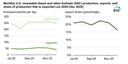
The U.S. exported nearly 50,000 barrels per day (b/d) of renewable diesel and other biofuels—a category which includes sustainable aviation fuel (SAF)—in the second half of 2025 (2H25), about 20% of the combined production for those fuels.

Hawaii lawmakers on May 6 approved legislation to create a clean fuel standard (CFS) that aims to reduce the CI of transportation fuels by at lease 50% below 2019 levels by 2045. The bill will now be considered by Hawaii Gov. Josh Green.

Bayer and bp on May 7 announced that they have entered a long-term strategic alliance to jointly scale the crop camelina, under the brand name newgold. The feedstock can be used to produce biodiesel, renewable diesel and SAF.
Par Pacific Holdings Inc. on May 5 confirmed that its Hawaii renewable fuels facility began operations in April. The biorefinery has the capacity to produce 61 MMgy of renewable diesel, SAF and other renewable fuels.
The European Commission in April approved a delegated regulation to update the methodology and data for high-ILUC risk biofuels. The change, if formally adopted, would phase out the use of soybean oil as a biofuel feedstock in the EU by 2030.

U.K.-based Clean Planet Technologies has announced the opening of a pilot facility that converts waste plastic to sustainable aviation fuel (SAF). The facility utilizes pyrolysis, purification, distillation and hydroprocessing technologies.

Sasol has reached a major milestone in South Africa’s energy and industrial transition, with Natref becoming the first refinery in Africa to achieve product sustainability certification for key fuels production pathways.
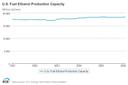
U.S. fuel ethanol production capacity expanded in February, according to data released by the U.S. EIA. Biodiesel production capacity and production capacity for renewable diesel and associated biofuels remained steady.
U.S. biofuels producers consumed an estimated 27.136 billion pounds of feedstock in February, down 6% when compared to the previous month, but up 4% when compared to February 2025, according to data released by the U.S. EIA.
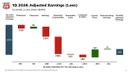
Phillips 66 released Q1 financial results on April 29, reporting a decrease in pre-tax loss for its renewable fuels segment. As economics for biobased diesel fuels continue to improve, the company expects to see additional improvement in Q2.

Lummus Technology has announced GPS Renewables has selected its ethanol-to-jet technology for National Thermal Power Corp.’s Project at Pudimadaka, Andhra Pradesh, India. This is the first commercial license of Lummus' integrated ETJ technology.
Advertisement

@ Copyright 2026 - BBI International - All rights reserved.