

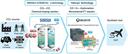
SEKISUI CHEMICAL CO. LTD. and Velocys Inc. have signed a memorandum of understanding (MOU) establishing a strategic partnership to advance production technology for electro-sustainable aviation fuel (e-SAF), a CO2-derived synthetic fuel.

Universal Fuel Technologies’ ethanol-to-jet SAF produced via the company’s Flexiforming technology has been accepted into the ASTM D4054 Clearinghouse, which supports the technical evaluation of new aviation fuels, for qualification.

Air India and Indian Oil Corp. Ltd. on Aug. 19 signed a memorandum of understanding (MOU) for the supply of sustainable aviation fuel (SAF), marking a major step towards a greener future for Indian aviation.
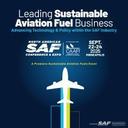
SAF Magazine and the Commercial Aviation Alternative Fuels Initiative announced the addition of new speakers to the 2025 North American SAF Conference & Expo, taking place Sept. 22–24 at the Minneapolis Convention Center in Minneapolis.
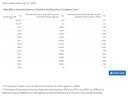
The U.S. EPA on Aug. 22 issued decisions on 175 small refinery exemption (SRE) petitions, granting full or partial exemptions of Renewable Fuel Standard blending obligations for 143 petitions. According to the EPA, 13 SRE petitions remain pending.

The U.S. EPA on Aug. 21 released data showing more than 1.92 billion RINs were generated under the Renewable Fuel Standard in July, down from 2.26 billion generated during the same month of last year.

STX Group, a leading environmental commodities trader and climate solutions firm, on Aug. 13 announced the completion of the first successful delivery of sustainable aviation fuel certificates (SAFc).

The U.S. EPA announced it has “developed a new approach” for reviewing SREs in a document filed with the U.S. Court of Appeals for the Tenth Circuit on Aug. 19. The agency is expected to issue decisions on outstanding SRE petitions soon.

University of New South Wales researchers are set to scale up a next-generation electrolyzer system that helps produce sustainable aviation fuel (SAF) using renewable energy, thanks to a $1.2 million grant from the TRaCE Lab to Market Fund.

Tidewater Renewables on Aug. 14 announced its renewable diesel facility British Columbia operated at 72% capacity during Q2. The company continues to advance plans to add SAF capacity to facility, with a final investment decision targeted for 2026.

Circularity Fuels has converted biogas from a California Central Valley dairy farm into syngas, a key precursor to SAF, using a compact electric processing unit one-hundredth the cost of conventional steam methane or autothermal reformers.

EcoCeres Inc., a leading pure-play renewable fuels producer, is partnering with Xiamen Airlines to collect and transport waste cooking oil from selected restaurant partners through its established supply chain.

Ethanol Producer Magazine has announced the 42th annual International Fuel Ethanol Workshop & Expo (FEW) will take place on June 2-4, 2026, at the America’s Center in St. Louis, Missouri.

Kintetsu World Express Inc. has entered into a new agreement with Shell Aviation regarding the use of SAF. Under this agreement, KWE will adopt Shell Aviation's digital platform "Avelia" to swiftly address shippers' low-carbon transportation needs.

The U.S. EIA increased its forecast for 2026 renewable diesel production in its latest Short-Term Energy Outlook, released Aug. 12. The 2026 forecast for SAF production was lowered, but the outlook for biodiesel production was maintained.

Gevo Inc. on Aug. 11 released second quarter results, reporting positive net income and positive adjusted EBTIDA for the period. The company also confirmed it is prioritizing development of a 30 MMgy ethanol-to-jet project in North Dakota.

Aemetis Inc. released Q2 results, reporting increase revenue when compared to Q1. During an earnings call, company officials detailed progress with the company’s RNG, ethanol, biodiesel, SAF and carbon CCS projects.

Conestoga Energy on Aug. 14 announced the acquisition of SAFFiRE Renewables LLC, a process technology company that enables production of ultra-low carbon intensity ethanol and intermediates, from Southwest Airlines Renewable Ventures LLC.

DHL Express and the Cathay Group have entered into a new SAF partnership. Under the agreement, Cathay will supply DHL Express with 2,400 metric tons of SAF for international flights departing from three airports in Asia.
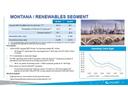
Calumet Inc. on Aug. 8 confirmed its Montana Renewables biorefinery is currently running at full capacity. An initial phase of the company’s MaxSAF initiative remains on track to boost SAF capacity to up to 150 MMgy by mid-2026.
The U.S. EPA on Aug. 13 announced the relaunch of EPA’s Guidance Portal, a streamlined website for accessing important guidance documents related to air quality, water protection, hazardous waste management, and more.

The USDA maintained its outlook for 2025-’26 soybean oil use in biofuel production in its latest World Agricultural Supply and Demand Estimates report, released Aug. 12. The forecast for soybean oil prices was also unchanged.

U.S. soybean production for 2025 is forecast at 4.29 billion bushels, down 2% when compared to last year, according to the USDA National Agricultural Statistics Service’s latest monthly Crop Production report, released Aug. 12.

As of July 2025, California’s SCFS requires renewable fuel producers using specified source feedstocks to secure attestation letters reaching back to the point of origin. This marks a significant shift in compliance expectations.
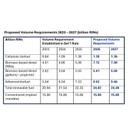
The public comment period on the U.S. EPA’s proposed rule to set 2026 and 2027 RFS RVOs and revise RFS regulations closed Aug. 8. Biofuel groups have largely expressed support for the proposal but also outlined several ways to improve the rulemaking.

The U.S. renewable fuels industry on Aug. 8 celebrated the 20th anniversary of the Renewable Fuel Standard. Federal lawmakers also marked the occasion with resolutions introduced in the House and Senate earlier this month.

In celebration of World Biodiesel Day, MOL Group on Aug. 8 announced SAF was successfully produced for the first time at INA’s Rijeka Refinery during a pilot project to process biocomponent. Renewable diesel was also produced.

At the University of Missouri, plant biochemist Jay Thelen is using arabidopsis as a powerful model to explore ways to boost oil production — an important step toward creating more sustainable, plant-based energy sources.

Provectus Biofuels Inc. on July 30 announced the company has signed a letter of intent with the Town of Vegreville in Alberta to develop a biofuel facility that will convert wheat straw into renewable jet fuel (RJF).

Iowa farmers have a new market opportunity for their 2025 soybean crop. Landus is expanding its Clean Fuel Regulation initiative, made possible by recent policy changes expected to increase Canada's demand for liquid biofuel.
Advertisement

@ Copyright 2026 - BBI International - All rights reserved.