

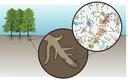
Scientists at ORNL conducted a meticulous analysis of the compounds released by plant roots into their surrounding environment. The analysis yielded an abundance of data that can guide research aiming to improve the way we grow energy and food crops.

A team of agricultural economists, environmental scientists and policy experts envisions a path toward a carbon-neutral agricultural future by expanding the reach of policies designed to promote low-carbon biofuels for transportation and aviation.

A bipartisan group of lawmakers on Sept. 30 sent a letter to the U.S. EPA urging the agency to maintained proposed biomass-based diesel RVOs and move forward with plans to boost the domestic ag industry in its upcoming RFS “Set 2” rule.

The sustainable aviation fuel (SAF) industry’s biggest players gathered at the North American SAF Conference and Expo in Minneapolis on Sept. 22-24 to confront the sector’s steep challenges and chart its path forward.

Old crop soybeans stored in all positions as of Sept. 1, 2025, totaled 316 million bushels, down 8% when compared to the same time last year, according to the USDA NASS’s latest quarterly Grain Stocks report, released Sept. 30.
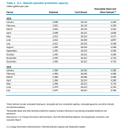
Total operable U.S. biofuel production capacity fell slightly in July, with declines for biodiesel and renewable diesel. Ethanol capacity was up slightly and total feedstock consumption was up 2% when compared to June.

The International Air Transport Association, in partnership with Worley Consulting, has published a study demonstrating that sufficient SAF feedstock exists to enable the airline industry to achieve net zero CO2 emissions by 2050.

The USDA maintained its 2024-’25 and 2025-’26 forecasts for soybean oil use in biofuel production in its latest WASDE report, released Sept. 12. The estimate for 2023-’24 soybean oil use in biofuel production was revised up.

The USDA increased its forecast for 2025 soybean production in its latest Crop Production report, released Sept. 12. Soybean production for beans is forecast at 4.3 billion bushels, up slightly from the August forecast, but down 2% from last year.

The U.S. Department of Energy on Aug. 29 awarded funding to two SAF research projects, including a project that aims produce SAF from bio-derived methanol and a project that aims to use distillers grains with solubles (DGS) as a SAF feedstock.

More than 40 members of Congress on Sept. 9 sent a letter to U.S. EPA Administrator Lee Zeldin urging the agency to reduce proposed RFS RVOs for 2026 and 2027, block reallocation of SRE volumes, and scrap plans to boost domestic biofuel production.
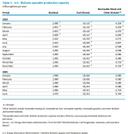
The U.S. EIA on Aug. 29 released data showing total U.S. operable biofuels capacity expanded slightly in June, with small gains for both ethanol and renewable diesel. Feedstock consumption was up when compared to the previous month.
Sky’s the Limit

September 02, 2025
Colocated with the 2025 International Fuel Ethanol Workshop and Expo, this year’s Sustainable Fuels Summit offered key insights into future SAF markets, feedstocks and opportunities.

EcoCeres Inc., a leading pure-play renewable fuels producer, is partnering with Xiamen Airlines to collect and transport waste cooking oil from selected restaurant partners through its established supply chain.
The USDA maintained its outlook for 2025-’26 soybean oil use in biofuel production in its latest World Agricultural Supply and Demand Estimates report, released Aug. 12. The forecast for soybean oil prices was also unchanged.
U.S. soybean production for 2025 is forecast at 4.29 billion bushels, down 2% when compared to last year, according to the USDA National Agricultural Statistics Service’s latest monthly Crop Production report, released Aug. 12.

As of July 2025, California’s SCFS requires renewable fuel producers using specified source feedstocks to secure attestation letters reaching back to the point of origin. This marks a significant shift in compliance expectations.

At the University of Missouri, plant biochemist Jay Thelen is using arabidopsis as a powerful model to explore ways to boost oil production — an important step toward creating more sustainable, plant-based energy sources.

Iowa farmers have a new market opportunity for their 2025 soybean crop. Landus is expanding its Clean Fuel Regulation initiative, made possible by recent policy changes expected to increase Canada's demand for liquid biofuel.
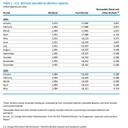
Total U.S. operable biofuels production capacity expanded in May, with gains for renewable diesel and a small decrease for ethanol, according to data released by the U.S. Energy Information Administration. Feedstock consumption was up.

The U.S Department of Energy Bioenergy Technologies Office, in partnership with the Algae Foundation and NREL, on July 21 announced the grand champion and top four winning teams of the 2023 - 2025 U.S. DOE AlgaePrize Competition.
The USDA significantly increased its estimate for 2025-’26 soybean oil use in biofuel production in its latest World Agricultural Supply and Demand Estimates report, released July 11. The outlook for soybean production was revised down.
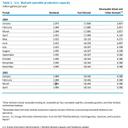
U.S. fuel ethanol capacity fell slightly in April, while biodiesel and renewable diesel capacity held steady, according to data released by the U.S. EIA on June 30. Feedstock consumption was down when compared to the previous month.

The U.S. EPA on July 8 hosted virtual public hearing to gather input on the agency’s recently released proposed rule to set 2026 and 2027 RFS RVOs. Members of the biofuel industry were among those to offer testimony during the event.

The USDA’s Risk Management Agency is implementing multiple changes to the Camelina pilot insurance program for the 2026 and succeeding crop years. The changes will expand coverage options and provide greater flexibility for producers.
The USDA’s National Agricultural Statistics Service on June 30 released its annual Acreage report, estimating that 83.4 million acres of soybeans have been planted in the U.S. this year, down 4% when compared to 2024.

SAF Magazine and the Commercial Aviation Alternative Fuels Initiative announced the preliminary agenda for the North American SAF Conference and Expo, being held Sept. 22-24 at the Minneapolis Convention Center in Minneapolis, Minnesota.

Scientists at ORNL have developed a first-ever method of detecting ribonucleic acid, or RNA, inside plant cells using a technique that results in a visible fluorescent signal. The technology could help develop hardier bioenergy and food crops.

The 2025 International Fuel Ethanol Workshop & Expo, held in Omaha, Nebraska, concluded with record-breaking participation and industry engagement, reinforcing its role as the largest and most influential gathering in the global ethanol sector.

TotalEnergies and Quatra, the European market leader in the collection and recycling of used cooking oil, have signed a 15-year agreement beginning in 2026, for the supply of 60,000 tons a year of European used cooking oil.
Advertisement

@ Copyright 2026 - BBI International - All rights reserved.