


The planned merger between Union Pacific and Norfolk Southern hit a snag on Jan. 16 when the Surface Transportation Board issued a unanimous decision finding that the merger application is incomplete.

The U.S. Energy Information Administration currently expects the production of renewable diesel and other biofuels, including SAF, to expand in 2027, according to the agency’s latest Short-Term Energy Outlook, released Jan. 13.
The USGBC recently escorted reporters from weekly Japanese business journals and other influential outlets on a tour of the U.S. biofuel value chain, with a focus on ethanol’s application as a feedstock for SAF through alcohol-to-jet technology.

In 2025, SAF output is expected to reach 1.9 million metric tons (Mt) (2.4 billion liters), double the 1 Mt produced in 2024, according to the IATA. However, in 2026, SAF production growth is projected to slow down and reach 2.4 Mt.
The U.S. EIA maintained its forecasts for 2026 renewable diesel and biodiesel production in its latest Short-Term Energy Outlook, released Nov. 12. The 2026 outlook for “other” biofuel production, which includes SAF, was reduced.

Clean Fuels Alliance America on Oct. 22 wrote U.S. Trade Representative Jamieson Greer, asking him to close a loophole in the administration’s Reciprocal Tariff regime that exempts diesel and renewable diesel from reciprocal tariffs.

The National Farmer Union is urging the White House and congressional leadership to dedicate resources toward expanding use of ethanol, biodiesel and SAF as part of any effort to provide assistance to struggling U.S. agricultural producers.
The U.S. EIA maintained its forecasts for 2025 and 2026 renewable diesel production in its latest Short-Term Energy Outlook, released Oct. 7. The production outlook for “other” biofuels, which includes SAF, was also unchanged.
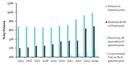
Advanced Biofuels Canada on Sept. 22 released the 10th annual Navius Research Biofuels in Canada report, the national report on Canada’s renewable and low-carbon fuel markets that shows biofuels have reached record use in Canada.

The New Mexico Environmental Improvement Board on Sept. 22 kicked off a public hearing to gather public input on a proposed rule to implement the state’s Clean Transportation Fuel Program. The hearing could continue through November.

The U.S. EIA reduced its outlook for 2025 biodiesel and renewable diesel production in its latest Short-Term Energy Outlook, released Sept. 9. The 2026 production outlook for other biofuels, which includes SAF, was revised up.

Business aviation is looking at SAF as a key means of reaching carbon reduction and sustainability goals.
Sky’s the Limit

September 02, 2025
Colocated with the 2025 International Fuel Ethanol Workshop and Expo, this year’s Sustainable Fuels Summit offered key insights into future SAF markets, feedstocks and opportunities.
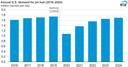
Five years after the COVID-19 national emergency was declared, gasoline demand, distillate demand, and jet fuel demand all remain less than pre-pandemic averages, according to the U.S. Energy Information Administration.

Ethanol Producer Magazine has announced the 42th annual International Fuel Ethanol Workshop & Expo (FEW) will take place on June 2-4, 2026, at the America’s Center in St. Louis, Missouri.

The USGC recently sponsored South Korea SAF experts to tour the U.S. alcohol-to-jet Fuel (ATJ) technology supply chain. Participants met with stakeholders ranging from low-CI corn farmers to ATJ SAF production technology companies and airlines.

President Donald Trump on July 22 announced new trade framework agreements with Indonesia and Japan. Both agreements are expected to benefit the U.S. agriculture industry, including farmers and ethanol producers.

The U.K. Department for Transport on July 22 awarded £63 million ($82.22 million) to 17 sustainable aviation fuel (SAF) companies through the governments’ Advanced Fuels Fund. The funding is expected to support approximately 1,400 jobs.

CARB on June 27 announced amendments to the state’s LCFS regulations will take effect beginning on July 1. The amended regulations were approved by the agency in November 2024, but implementation was delayed due to regulatory clarity issues.
Legislation introduced in the California Senate on June 23 aims to cap the price of Low Carbon Fuel Standard credits as part of a larger effort to overhaul the state’s fuel regulations and mitigate rising gas prices.

In May, U.S. Grains Council Chairwoman Verity Ulibarri and USGC President and CEO Ryan LeGrand traveled to Beijing and Hong Kong, China to meet with key industry counterparts and join the USDA’s Agribusiness Trade Mission.
The U.S. EIA reduced its 2025 and 2026 production forecasts for a category of biofuels that includes SAF in its latest Short-Term Energy Outlook, released June 10. The forecast for 2025 renewable diesel production was also revised down.
The U.S. Energy Information Administration maintained its 2025 and 2026 forecasts for renewable diesel and “other biofuel” production, which includes SAF, in its latest Short Term Energy Outlook, released May 6.

Ethanol Producer Magazine has announced the keynote speakers for the 2025 International Fuel Ethanol Workshop & Expo (FEW) being held June 9-11, 2025, at the CHI Health Center in Omaha, Nebraska. The general session will take place June 10.
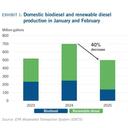
CoBank latest quarterly research report highlights current challenges facing the biobased diesel industry. The report cites policy uncertainty and trade disruptions due to tariff disputes as factors impacting biofuel producers.

The USGC’s office in Beijing in March organized a set of meetings aimed at assessing demand for SAF. USGC Director in China Manuel Sanchez led the team that included USGC Program Manager Ellie Yan and USGC Regional Ethanol Consultant Aaron Goh.

The U.S. Department of Commerce has disbanded an advisory committee that provided the agency with private sector advice aimed at boosting the competitiveness of U.S. renewable energy and energy efficiency exports, including ethanol and wood pellets.

As the Philippines moves toward unlocking the potential of SAF, the USGC collaborated with the Philippines Department of Transportation and Boeing to conduct the first Philippines SAF Summit in Manila.

The Minnesota Senate Taxes Committee on March 3 voted to approved legislation that aims to extend and expand the state’s existing tax credit for sustainable aviation fuel (SAF), which was established in 2023.

The U.K. government on March 3 opened a public consultation on a SAF revenue certainty scheme, which aims to reduce financial risks for emerging SAF producers. The scheme complements the U.K.’s SAF mandate, which came into force Jan. 1, 2025.
Advertisement

@ Copyright 2026 - BBI International - All rights reserved.